


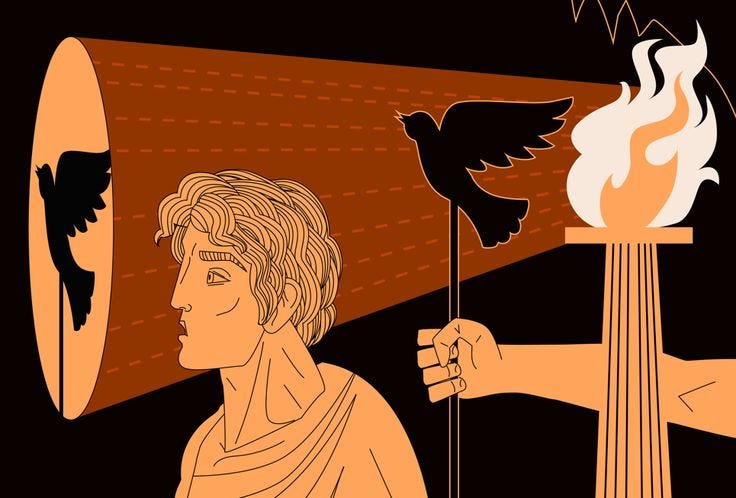
Plato gave us the first one more than two thousand years ago. A group of people chained inside a cavern, unable to turn their heads, watching shadows flicker across a wall and believing that those shadows are reality because they have never seen anything else. One prisoner eventually escapes, steps into the light, and discovers that what he had taken to be the whole world was only a projection of something much larger happening behind him.
Most of us experience some version of this at least once in our lifetime. We grow up believing that the world works in a certain way, that institutions broadly do what they do, that hard work is rewarded, that the rules are applied with some degree of consistency, that governments exist primarily to serve the public, that companies compete by making better products, and that although corruption and exploitation certainly exist, they are deviations from a system that is otherwise trying to function properly.
Then, gradually (or suddenly), something changes. You read more history. You work inside a large institution. You watch a crisis unfold. You discover how lobbying works. You see what happens when an organisation’s stated values collide with its financial interests. You learn how much of politics depends not merely on ideas but on access, money, timing, legal structures, media ownership and the ability to withstand consequences that would destroy somebody with fewer resources.
Despite this, I increasingly think that this is only the first awakening, because there’s another realisation waiting after it, one that is far less comfortable than discovering that the shadows were not real.
What if the systems we spend so much time describing as broken are not, in the most important sense, broken at all? What if they are simply producing the outcomes that their incentives, structures and power relationships make them likely to produce?
The British cybernetician1 Stafford Beer offered a remarkably simple way of thinking about this when he coined the principle now commonly summarised as “The Purpose Of a System Is What It Does.”
The idea, usually abbreviated to POSIWID, asks us to stop judging systems primarily by what they claim to be for and instead pay attention to what they repeatedly produce. A company might say that its employees are its greatest asset, but if it routinely burns people out and replaces them, then that behaviour tells us more about the system than the slogan does. Or, a social platform might say that its purpose is to connect people, but if its incentives consistently reward outrage, addiction and polarisation, then those outcomes deserve to be treated as part of what the system is actually doing. Or, a political system might promise equal representation, but if wealth repeatedly translates into dramatically greater access, visibility and influence, then it’s not enough to keep pointing to the ideals written above the door.
POSIWID does not require us to believe that every harmful outcome was secretly designed by a group of people in a room. In fact, that’s the part of what makes the idea so powerful. Systems can produce destructive outcomes without anyone explicitly intending the whole result. This is because incentives, feedback loops, institutional survival and accumulated advantage can reproduce patterns all by themselves.
And once you begin looking at the world this way, it becomes difficult not to notice that some people are much better at understanding those incentives than the rest of us.
Some People Are Playing A Different Game
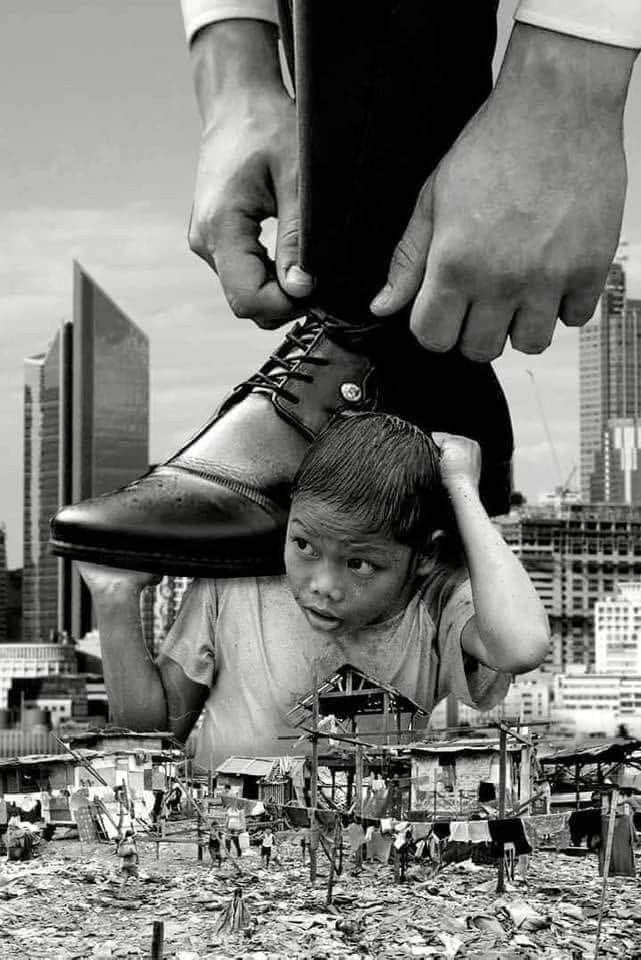
Most ordinary people are raised with some variation of the same moral education — work hard, be honest, treat other people fairly, keep your promise, do not cheat, do not exploit people simply because you can, respect the rules, and try to leave things better than you found them.
There’s nothing wrong with any of this. I would rather live in a society filled with people who believe these things than one dominated by people who do not.
The problem appears when we assume that everyone else is approaching the world through the same framework. And this is where even Machiavelli himself becomes uncomfortable.
Niccolò Machiavelli has been reduced in popular culture to a shorthand for manipulation and ruthlessness, but what makes The Prince2 enduringly disturbing is not that Machiavelli advised rulers to behave badly. His blatant offence was to examine power without assuming morality and political survival would naturally point in the same direction.
He asked questions that remain relevant five hundred years later.
What allows someone to gain power? What allows them to keep it? When does generosity strengthen a ruler, and when does it weaken him/her? When is an alliance useful, and when does loyalty become strategically dangerous? How important is it to be virtuous compared with appearing virtuous? What happens when doing the morally admirable thing creates the conditions for somebody less scrupulous to replace you?
Machiavelli was not interested in describing the world as we would like it to be. He was interested in describing what people actually do when power is at stake.
It’s an uncomfortable perspective because many of us have been taught to play what might be called the “moral game”, while highly competitive political, corporate, and financial environments constantly reward people who also understand a very different game.
Imagine two people sitting at the same table. One has been taught that agreements should be honoured because breaking them would be dishonourable; the other asks what the penalty for breaking the agreement would be. One refuses to exploit an advantage because it feels unfair; the other regards an unused advantage as incompetence. One thinks primarily about surviving the month; the other is building a strategy whose payoff may not arrive for twenty years.
They are playing against each other, but they are not playing with the same mental model.
I’m not saying that ruthless people always win. They do not. Cooperation, trust, reputation and genuine integrity are also forms of power, and societies cannot function without them. But some environments fail to punish Machiavellian behaviour, while others actively reward it, and the people who understand this usually gain an advantage over those who assume that behaving ethically is enough to protect them.
Wealth then compounds that asymmetry. At ordinary people levels, money buys comfort. At extreme levels, money buys capability.
It buys lawyers, lobbyists, political donations, research, public relations, media platforms, security, access to decision-makers, the acquisition of competitors, the ability to finance litigation for years, and the capacity to absorb losses that would destroy a smaller being.
But more than anything, it buys time.
I think this is one of the least discussed forms of inequality because we usually measure wealth in currency rather than in planning horizon, but the difference is enormous. A person struggling to make rent thinks in weeks. A family living paycheck to paycheck may be thinking about Friday. A company planning factories, energy infrastructure or supply chains thinks in decades. A billionaire deciding where to place capital can think about markets, political change, technology, resource scarcity and succession over periods that stretch well beyond the next election.
This is why it matters that global billionaire wealth has expanded so dramatically, not simply because some people can afford absurd luxuries, but because at sufficient scale capital can be converted into other forms of power.
Money can become media → Media can shape narratives → Narratives can move voters → Votes can change regulation → Regulation can reshape markets → Markets can generate more money…..
Power is not a static thing. It gets converted, protected and compounded.
Powerful people understand this instinctively because power is not something they merely possess, it’s something they practise. And most ordinary people like you and me, by contrast, are rarely taught to think in these terms at all.
The Walls Have Become More Transparent
At the same time that wealth and institutional power have become increasingly concentrated in some areas, something else has happened that complicated the picture — the walls around powerful institutions have become more porous.
Whistleblowers are not new. Investigative journalism is not new. Institutional corruption is certainly not new. The #MeToo movement predates COVID by years, and its global explosion in 2017 was already demonstrating what happens when thousands of previously isolated experiences suddenly become visible to one another. But over the last decade, and particularly through the pandemic years, information that would once have remained inside institutions has become much harder to contain.
Billions of people now carry cameras in our pockets. Employees can document internal conversations. Survivors can speak directly to the public without first persuading newspaper editor that their story deserves attention. Researchers across different countries can work from the same leaked database. Satellite imagery allows citizens to observe things that once required the resources of a government. Open-source investigators can reconstruct events using videos, public records and geolocation. A document can cross the world before the institution named in it has finished writing its response.
Then COVID arrived and exposed billions of people, almost simultaneously, to the inner workings of systems that many of us had previously treated as background infrastructure. Suddenly healthcare systems, supply chains, pharmaceutical companies, schools, employers, governments, scientific institutions, social platforms and media organisations were no longer abstract. Many of us were feeling the consequences of their strengths and failures in real time.
We saw extraordinary acts of professionalism and sacrifice, but we also saw contradictions, political opportunism, confused messaging, unevenly enforced rules, institutional defensiveness and massive concentration of wealth. We watched scientific understanding evolved with new evidence emerged, while political institution communicated to the public with far more certainty than the evidence allowed. We watched governments make decisions that affected every detail of our daily lives. We watched technology companies become even more central to communication, commerce and work. And we watched populations argue about all of it through information systems whose own incentives rewarded the most emotionally provocative interpretation available.
The result was not a universal awakening into truth, unfortunately. Quite the opposite.
Greater transparency arrived at the same time as greater misinformation.
The same technologies that made it harder to hide wrongdoing also made it easier to manufacture falsehoods, clip statements out of context, flood public attention with noise and create convincing narratives around incomplete evidence.
This has produced one of the defining contradictions of the information age — we have access to more information than almost any population in history but many of us feel less certain about what to believe.
And quite understandably, some people have responded by looking away.
The news is too exhausting.
There is always another war, another scandal, another election, another climate disaster, another economic crisis, another technological threat, another political outrage, another billionaire buying something important, another institution telling us that everything is under control.
A growing number of people now say some variation of the same thing, I don’t follow politics anymore. I just want to work, make enough money, take care of my family and live my life.
I understand that impulse completely.
But Yuval Noah Harari captured this very problem in 21 Lessons for the 21st Century when he wrote:
“If the future of humanity is decided in your absence, because you are too busy feeding and clothing your kids — you and they will not be exempt from the consequences.”
That sentence bothers me because it is true in a way that our exhausted attention spans do not want it to be. The decision do not stop because we stop reading about them. The legislation continues. The contracts are signed. The mergers happen. The extraction continues. The algorithm keep developing. The lobbying continues. The technologies are deployed.
The people who are thinking ten or twenty years ahead do not stop planning because the rest of us need a break. Our attention has itself become a scarce resource, and it makes sense to protect it. But there’s a difference between protecting your attention and surrendering your awareness.
Unfortunately, one of the cruellest characteristics of the modern world is that the people with the least spare time to understand power are the very people who will live most directly with the consequences of its decisions.
We Keep Fighting Sideways
There is a sentence that appears online in many different forms, usually expressing the same idea: an ordinary person in one country may have far more in common with an ordinary person in another country than either of them has with the political and economic elites governing them.
I have never found a reliable source for the exact modern wording, but the idea itself is much older, and one of its most famous expressions appears in the closing words of The Communist Manifesto:
“Working Men of All Countries, Unite!”
You don’t have to accept Marx’s entire worldview to understand why that sentence still has resonance to this day.
Imagine an ordinary Thai nurse, an American teacher, an Iranian engineer, a British delivery driver, a Filipino parent and a Chinese office worker sitting around a table. They may disagree about religion, immigration, gender, sexuality, history, politics, family, nationalism and almost everything else that fills social media feeds. But ask them what they worry about at two in the morning.
Can I afford my home?
Will my parents be okay?
What happens if I lose my job?
Will my children ever afford a house?
Why is food becoming more expensive?
What happens if somebody in the family gets sick?
Will I have enough money when I am old?
Is there going to be another war?
What kind of world are my children inheriting?
Suddenly the distance between all of us becomes much smaller. Even though our languages are different, our governments are different, our political cultures may be completely different, but our vulnerabilities are certainly recognisable to one another.
The person who worries about a 20% increase in electricity costs inhabits a different world from the person considering whether to acquire an electricity company. And yet, much of modern politics encourages us to direct our anger horizontally.
Citizen against migrant.
Urban against rural.
Young against old.
Men against women.
Religious against secular.
One nationality against another.
Left vs. right.
One generation accusing another of stealing its future.
The list goes on.
These conflicts are not imaginary. Some involve genuinely incompatible beliefs. Ordinary people can oppress other ordinary people, and power does not only move from the top down. But we should be much more suspicious of any political story that consistently asks relatively powerless groups to regard one another as the primary explanation for their insecurity. Because while we fight sideways, power continues moving upward, and become even more concentrated.
I was recently introduced to Sand Talk by a good friend and fellow Substack writer, Dave from An Animist’s Ramblings. He is someone who has unbridled enthusiasm for indigenous cultures and wisdom. The author, Tyson Yunkaporta draws on Indigenous Australian knowledge systems to interrogate some of the premises that industrial societies treat almost as laws of nature, with one of the most important being our near-total identification of progress with growth.
He distinguishes between growth and increase.
GROWTH makes system larger. More extraction. More transactions. More consumption. More GDP.
INCREASE, by contrast, makes the relationships inside the system richer, stronger, and more complex. That translates to more connection, more reciprocity, more resilience, more knowledge circulating through the network, more relationships between people, place and responsibility.
The distinction becomes even more uncomfortable when we compare it with the machinery of modern economics.
A company earning ten billion dollars this year is usually expected to earn more next year. An economy is described as healthier when it becomes larger. Investors expect growth. Pensions depend upon growth. Debt anticipates future growth. Political legitimacy is frequently tied to growth. The entire structure points forward toward more → more energy, more resources, more production, more consumption, more value extracted from the physical world.
And we have somehow placed this expectation of indefinite expansion inside a finite ecological system.
So, perhaps one of the most successful lies modern civilisation has ever told itself is that expansion and progress are synonymous. If we produce more, we are advancing. If we consume more, we are prospering. If technology becomes more sophisticated, society must becoming wiser. If GDP rises, something must be going well.
Indigenous knowledge challenges that equation because it starts from a different relationship with the world. What if land is not primarily an asset waiting to be converted into economic value? What if forest has value before somebody discovers how much money can be made by cutting it down? What if leaving resources untouched for people who have not yet been born is not economic inefficiency but basic responsibility? What if human beings aren’t owners standing outside nature, but participants inside a system whose stability determines our own?
An inspiring story of an indigenous leader:
Nemonte Nenquimo, a leader and a mother, who dedicated her life to the defence of Indigenous ancestral territory and cultural survival in the Amazon rainforest, helped organise Waorani communities in Ecuador against oil extraction on their territory, combining Indigenous knowledge, legal strategy, mapping, digital campaigning, and international advocacy to protect roughly half a million acres of Amazon rainforest.
It wasn’t just one person that helped save the rainforest. It was a combined effort of a network, a community, the lawyers, other organisers, the journalists. People who had never met one another came together to contribute.
We have to start being that somebody who refuse the assumption that extraction was inevitable. Somebody has to say that the future being presented as “progress” wasn’t the only version of the future available.
Power Understands Systems Better Than We Do
The more I think about all of this, the less convinced I am that the fundamental divide is simply rich versus poor, or left versus right, or even powerful versus powerless. Another divide that matters just as much is a divide in systems literacy.
Power understands systems.
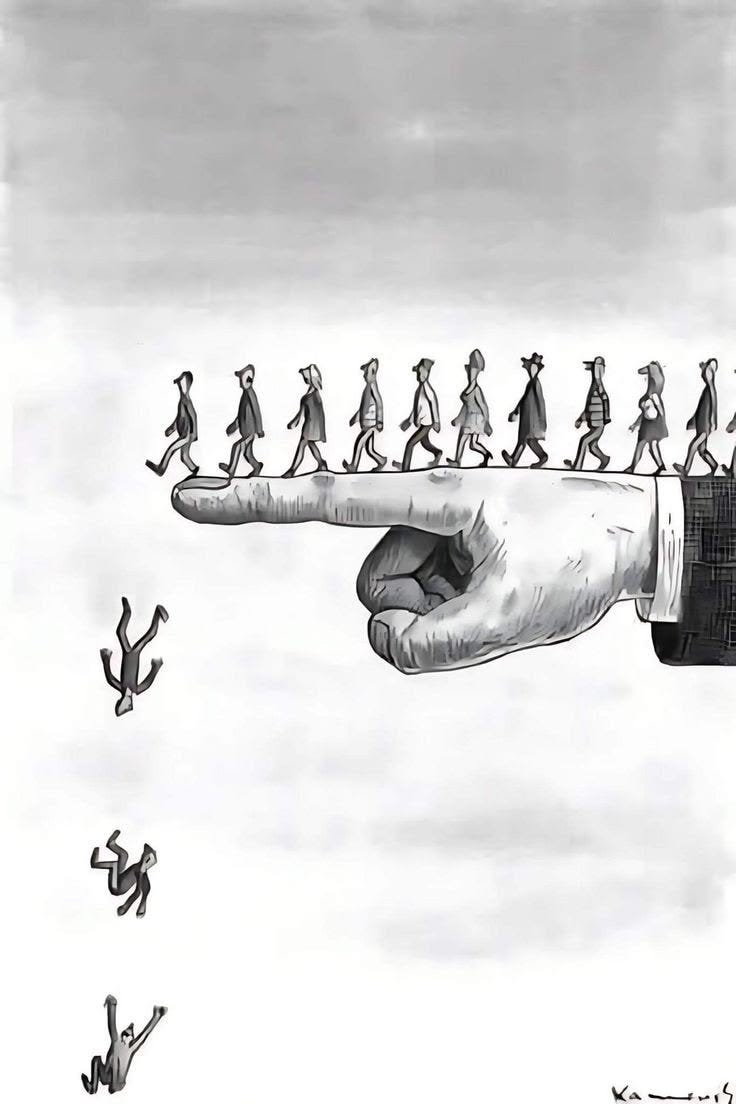
People who operate effectively around power understands that outcomes are rarely determined by individual choices alone. They understand that changing one regulation can matter more than persuading a million consumers, that owning infrastructure matters more than winning an argument, that controlling distribution can be more valuable than producing the best idea, and that whoever defines the language of a debate usually determines which solutions are considered reasonable in the first place. They understand lobbying, networks, legal precedent, institutional memory, political donations and the importance of shaping the conditions under which decisions are made.
Most of us aren’t taught to think this way. We are taught citizenship largely as a moral exercise — vote, stay informed, work hard, respect other people, follow the law and try to make responsible choices. These things matter, of course, but they don’t amount to an understanding of power. It’s a little like being taught to work hard and be helpful, but never being taught how promotions, budgets, influence and decision-making in a corporate environment actually work. You can be competent, decent and hardworking, and still misunderstand how outcomes are being decided around you.
This is why I think people who care about fairness need to become much more comfortable studying power. Understanding power doesn’t mean you want to dominate others. Understanding incentives, leverage and strategy simply makes you harder to exploit because it will help you recognise who is shaping the conditions around you, even when that influence is not immediately visible.
Regardless, there’s a strange asymmetry I have to mention. Those who actively seek power are usually the people who study how to acquire, protect and extend it, while those who want a fairer society sometimes behave as though studying power itself is ethically questionable. We talk about awareness while others organise; we argue about values while others shape policy; we react to today’s controversy while institutions and investors plan years ahead.
History is full of people who were morally right and still lost. It’s also full of people who began with very little power, learned how systems worked, built alliances and eventually became impossible to ignore.
So What Can One Person Actually Do?
This is where the conversation becomes overwhelming. Once a problem is large enough, the obvious response is: What exactly am I supposed to do about it? I am one person. I cannot compete with governments, corporations or billionaires.
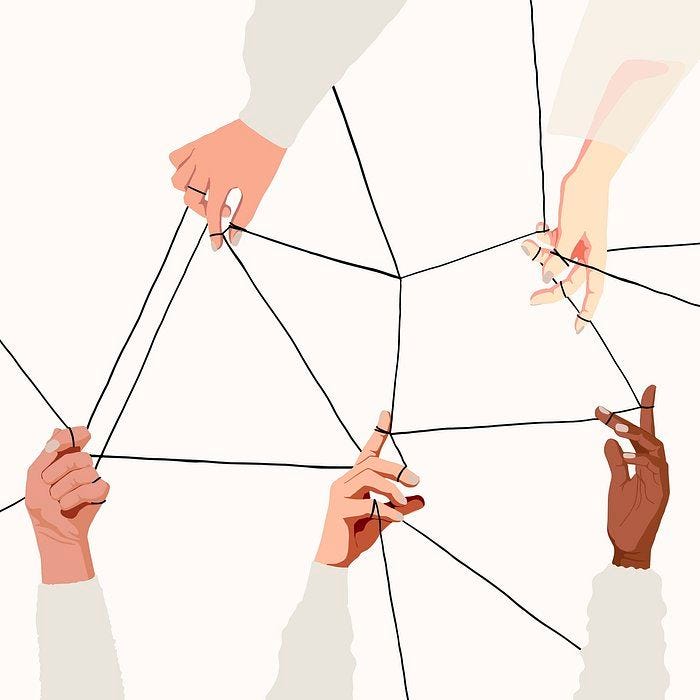
That is true if we imagine individual power as one person somehow overpowering an entire system. But almost no meaningful change happens that way. Individuals create relationships, relationships become networks, networks become organisations, and organisations can eventually change norms, institutions and laws. One person’s power lies less in what they can accomplish alone than in what they can help other people see, understand and coordinate around.
The whistleblower Frances Haugen did not personally regulate Facebook, she changed what legislators, journalists and the public knew. Tarana Burke who founded the MeToo movement, did not end sexual violence, she helped create language through which millions of previously isolated experiences became collectively recognisable. Nemonte Nenquimo did not personally stand between oil companies and the Amazon, she helped organise people, knowledge, law and attention around a common objective.
Once we think about individual responsibility this way, there are four practical things we can start right away.
Learn to read systems rather than slogans — When an institution tells you what it values, pay attention, but then look at what it consistently rewards. Follow the money. Ask who benefits, who absorbs the costs, what behaviour gets promoted and what happens when stated principles collide with institutional survival. Judge systems partly by their repeated outputs, not only their declared intentions.
Protect your attention without surrendering your awareness — Being informed doesn’t require living inside the news cycle. Read less if necessary, but read more deliberately. Look for primary sources, understand who owns the platforms through which information reaches you, and become particularly suspicious of stories that immediately confirm everything you already believe. Break out of your own echo chamber.
Resist being turned against people whose vulnerabilities resemble your own — Recognise the difference between opposing an idea and dehumanising the person who holds it. The stranger on the other side of a border may understand your fears about work, housing, healthcare and your children’s future far better than the powerful people asking both of you to fear one another.
Build something! — Support journalism worth preserving. Strengthen local institutions. Organise within your profession. Teach people how systems work. Join associations, support legal challenges, mentor someone, vote, attend the boring meeting, read the policy document and help someone else understand it. None of these actions feels historic while it’s happening, but systems themselves are built from accumulated relationships, precedents and decisions, which means they can also be changed through them.
And this is where Tyson Yunkaporta’s distinction between growth and increase becomes useful again. Instead of measuring progress only by whether we have become richer or larger, we might also ask whether our relationships have become stronger, whether knowledge travels more freely, whether communities can withstand shocks, and whether those who come after us are inheriting more possibilities rather than fewer.
Did you protect something worth preserving, or challenge something that had become normalised, or leave a community slightly more capable than you found it?
None of these things requires us to believe that one person can change everything. They require us to understand that systems are made of relationships, and relationships are precisely where individual actions can begin to accumulate into something larger.
Stop confusing our inability to change everything with an ability to change anything.
Cybernetics is the scientific study of control and communication in living organisms and machines. A look into how systems use information from their output as a new input to adjust and regulate their future behaviour (aka feedback loops).
The book argues that rulers must be pragmatic and are often forced to commit immoral or ruthless acts, such as deception or cruelty, to maintain stability and security. He advises that while it’s ideal for a ruler to be both loved and feared, fear is a much more reliable and controllable tool for preventing rebellion than affection.
I really appreciate your writing. I am glad you started to write again. You are very thoughtful and informative at the same time. As a neurodivergent person who always saw the systems but had an open empathetic heart it has been a challenge to figure out where to place action while at the same time seeing this so called "demise" of where patterns and systems are leading us. I recently am having talks with my sister on politics in Canada and for the life of me, I cannot get her to connect with the system of politics vs the "one person" or "one party" that made it all wrong. I believe you are correct in saying we all have to get involved within one system or another to challenge the assumptions. Its a new way of thinking because the school system doesn't teach this - living in the industrial age of education and boxes, those "systems" want to keep it the way it is ..people being expectant on where to go and what to do. Thank you again.
Interesting reflections.
https://crimsonkatsura.com/crimson-katsura/cave/